WhatsApp

+41445333425

Telefon

+41 (0) 44 533 34 25

Email

welcome@onetreuhand.ch

+41 (0) 44 533 34 25

welcome@onetreuhand.ch

×

Accounting for the Self-Employed

Keeping Financial Control and Success in Focus. Well-organised accounting helps self-employed individuals keep their finances under control, comply with legal requirements, and make informed business decisions.

12.01.2024 von Rodolfo Intaglietta EN
Letzte Aktualisierung: 03.02.2026
instructions
Advanced
7 Min

Accounting is a key management tool for self-employed professionals. It provides transparency over income, expenses, and overall financial performance. Modern and automated solutions simplify bookkeeping and improve efficiency.

What you will learn:

  • Fundamentals of accounting for the self-employed
  • Accounting obligations and legal framework in Switzerland
  • Differences between manual and digital accounting
  • Income and expenditure accounting methods
  • Role of accountants and trustees

fessional support from fiduciary or audit specialists if required

Required skilllevel

Basically knowledge required

Required Tools

  • Accounting software or online accounting solution
  • Digital storage for receipts and documents
  • Automated accounting systems
  • Support from accountants or trustees

Accounting for the Self-Employed in Switzerland

Accounting is the foundation of every business, including sole proprietorships and self-employed individuals. It enables the systematic recording and evaluation of all financial transactions and is closely linked to business success. Proper accounting provides a clear overview of income, expenses, and financial position.


Accounting Obligations in Switzerland

Regardless of company size or legal form, self-employed individuals in Switzerland are subject to accounting obligations. These are regulated by the Swiss Code of Obligations and ensure that business transactions are properly documented and archived. Compliance with these rules is essential for legal and tax conformity.


Manual Accounting versus Online Accounting

Traditionally, accounting was handled manually. Today, digital and online solutions offer significant advantages. They allow automation, location-independent access to data, and simplified collaboration with trustees or accountants. Documents and receipts are stored centrally, structured, and easy to retrieve.


Income and Expenditure Accounting

For many self-employed individuals, income and expenditure accounting is a suitable and straightforward method. It records income and expenses at the time of cash flow and provides a clear overview of financial performance. Depending on the nature and scale of the business, other accounting methods may be more appropriate.


Managing Accounting Independently or with External Support

Whether accounting is handled independently or outsourced to an accountant or trustee depends on individual factors.

These include expertise, business complexity, and available time. Professional support can help avoid errors and improve efficiency.


Automated Accounting Systems

Modern accounting systems enable a high degree of automation. They simplify processes, reduce human error, and provide up-to-date insights into the company’s financial situation at any time.


Specific Rules for the Self-Employed in Switzerland

The Swiss Code of Obligations defines which documents must be maintained and how long they must be retained. In addition, regional differences may apply and should be considered in accounting practices.


Role of the Trustee

Trustees support self-employed individuals with bookkeeping, accounting, and tax-related matters. They provide professional advice and ensure that legal requirements are met.


Accounting Software and Tools

A wide range of accounting software solutions is available to self-employed individuals. These range from simple templates to comprehensive programs that enable efficient and convenient bookkeeping.


Traditional Methods and Modern Approaches

The so-called “Milk Book” accounting method is a traditional form of bookkeeping in Switzerland. However, many self-employed professionals are increasingly choosing modern, digital alternatives to optimise their processes.


Accounting for Sole Proprietorships and SMEs

Sole proprietors have specific accounting requirements, while SMEs face additional challenges due to higher transaction volumes. In both cases, structured and accurate accounting is essential.


VAT Reporting and Annual Financial Statements

Correct VAT reporting is a key element of accounting. The annual financial statement provides an opportunity to review financial performance and set objectives for the future.

Häufige Fragen zu Buchhaltungskennzahlen

What are accounting standards and why are they important?

Accounting standards are defined sets of rules and guidelines that determine how companies present their financial information. They ensure consistent and reliable reporting, which builds trust among investors and stakeholders.

Are there differences between Swiss GAAP FER and IFRS?

Yes. Swiss GAAP FER places greater emphasis on Swiss market conditions and typical corporate structures, while IFRS is internationally oriented and focuses on global comparability.

Why can the implementation of Swiss GAAP FER be challenging for companies?

Interpreting and applying the standards can be complex, as specific requirements must be implemented correctly. Additional effort may also be required for documentation and disclosure.

What are the benefits of complying with Swiss accounting standards?

Compliance enables a clear and reliable presentation of a company’s financial position, taking Swiss business practices into account. This enhances transparency and comparability within the local economy.

What role does the Federal Audit Oversight Authority (FAOA) play in Switzerland?

The Federal Audit Oversight Authority supervises audit firms and contributes to quality assurance in auditing and financial reporting.

How do accounting standards influence investment decisions?

Clear and comparable financial information prepared in accordance with recognised standards allows investors to better assess risks and opportunities, supporting informed decision-making.

Which companies in Switzerland mainly use IFRS?

Primarily larger companies and those with international operations use IFRS to ensure global comparability of their financial reporting.

How do accounting standards adapt to economic changes?

Accounting standards are continuously developed to reflect changes in the economy, new technologies and international developments.

Key Takeaways

  • Accounting is essential for the success of self-employed individuals
  • Legal accounting obligations must be fulfilled
  • Digital solutions simplify processes and save time
  • Automation reduces errors and improves transparency
  • Trustees provide professional support and guidance

Accounting is a central management tool for self-employed individuals and is essential for meeting legal obligations.
With the right structure, suitable tools, and professional support if needed, bookkeeping can be managed efficiently and reliably.
Well-maintained accounting ensures transparency, supports informed decision-making, and contributes to long-term business success.

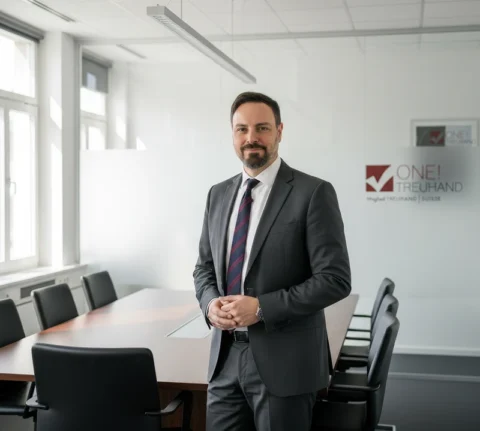
Ein kompetenter Steuerberater steht in einem modern eingerichteten Treuhand-Büro, bereit für mandantenorientierte Beratung.

Rodolfo Intaglietta EN

Rodolfo Intaglietta is the founder and managing director of ONE! Treuhand GmbH. As a Treuhänder mit eidg. Fachausweis (Swiss federally certified trustee) and a Diplomierter Experte in Rechnungslegung und Controlling (certified expert in accounting and controlling), he supports entrepreneurs across Switzerland with clear financial insights, digital processes, and personal, hands-on advisory services.

The qualification “eidg. diplomierter Experte in Rechnungslegung und Controlling” corresponds to NQF level 8, the highest level of formal education in Switzerland, and is comparable to a doctoral degree in terms of depth of expertise and level of responsibility.