WhatsApp

+41445333425

Telefon

+41 (0) 44 533 34 25

Email

welcome@onetreuhand.ch

+41 (0) 44 533 34 25

welcome@onetreuhand.ch

×

Successful Tax Optimisation for Companies

Targeted tax optimisation helps companies in Switzerland reduce their tax burden and secure long-term financial stability and competitiveness.

19.01.2024 von Rodolfo Intaglietta EN
Letzte Aktualisierung: 03.02.2026
instructions
Entry‑Level
12 Min

Summary

Tax optimisation is a key success factor for companies in Switzerland. Through sound planning, knowledge of cantonal tax regulations, and strategic decisions, tax burdens can be reduced in a lawful manner.

Both SMEs and sole proprietorships benefit from a structured and compliant approach.

What you will learn:

  • Importance and objectives of tax optimisation for companies
  • Fundamentals and analysis of the tax starting position
  • Use of tax deductions and structural advantages
  • Tax optimisation for SMEs and sole proprietorships
  • Risk management and compliance with tax regulations

Required skilllevel

Beginners knowledge

Required Tools

  • Up-to-date financial and accounting data
  • Knowledge of cantonal and national tax regulations
  • Documentation of investments, deductions, and financing structure
  • Processes for tax returns and compliance

Why Tax Optimisation Is Important

Tax optimisation is a key element of corporate management in Switzerland. It enables companies to reduce their tax burden and free up financial resources for investment, growth, and innovation. In a competitive environment, an efficient tax strategy can make a decisive difference.


Fundamentals of Tax Optimisation

A thorough understanding of tax legislation forms the basis of any tax optimisation strategy. Since tax regulations in Switzerland vary by canton, companies must be fully aware of their obligations and opportunities. Equally important is analysing the company’s starting position to develop realistic and effective optimisation measures.

This analysis includes a detailed financial review, strategic planning, and an assessment of tax-related risks. These steps help identify potential savings while avoiding legal uncertainty.


Tax Optimisation Strategies and Measures

Companies can reduce their tax burden through various measures. These include using all permissible tax deductions, such as for research and development, training, or investments. Choosing the appropriate legal form can also have a significant impact on taxation.

Strategic dividend planning, an efficient capital structure, and investments in innovation and sustainability are additional instruments of tax optimisation. Companies operating internationally must also consider cross-border tax aspects in order to avoid double taxation.


Tax Optimisation for SMEs and Sole Proprietorships

SMEs often have limited resources but benefit in Switzerland from specific tax incentives. Structured tax planning helps make targeted use of these advantages. Sole proprietorships can also reduce their tax burden and improve financial stability through deductions, structural decisions, and strategic planning.


Risk Management and Compliance

Tax optimisation requires strict compliance with all legal requirements. Accurate and timely tax returns as well as proper documentation are essential to minimise tax risks and avoid penalties. Effective risk management is therefore an integral part of any tax strategy.

FAQ

How can I reduce my company’s tax burden in Switzerland?

Through strategic planning, use of all available deductions, and optimisation of the company structure, tax burdens can be reduced.

Which tax deductions are available to companies in Switzerland?

Companies may claim deductions for research and development, investments, training, and operating expenses. Additional incentives may apply to SMEs.

Is tax optimisation legal?

Yes, tax optimisation is legal provided it is carried out within the framework of applicable laws and regulations.

Which legal form is best suited for tax optimisation?

The optimal legal form depends on individual objectives. Public limited companies, limited liability companies, and sole proprietorships each offer different tax advantages and disadvantages.

Do tax laws differ between cantons?

Yes, cantonal differences in tax rates and incentives can be significant and should be taken into account in planning.

Can sole proprietors also benefit from tax optimisation?

Yes, through targeted planning and use of tax deductions, sole proprietors can also reduce their tax burden.

Key Takeaways

  • Tax optimisation increases financial efficiency and competitiveness
  • Cantonal differences play a decisive role
  • The legal form has a significant impact on the tax burden
  • Tax deductions and investments offer optimisation potential
  • SMEs and sole proprietorships benefit from targeted planning
  • Compliance and risk management are essential

Tax optimisation is a central factor for the economic success of companies in Switzerland. Through sound planning, awareness of cantonal differences, and consistent compliance, tax burdens can be sustainably reduced. Both companies and sole proprietors benefit from a structured and legally compliant tax strategy.

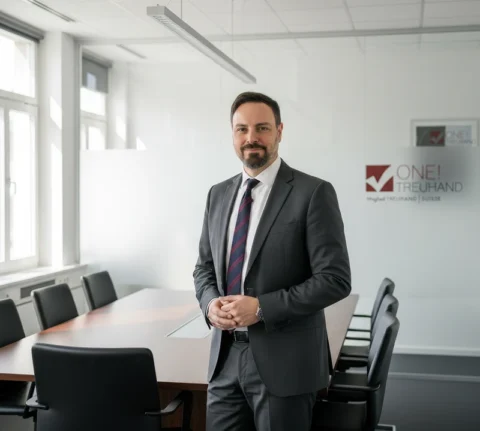
Ein kompetenter Steuerberater steht in einem modern eingerichteten Treuhand-Büro, bereit für mandantenorientierte Beratung.

Rodolfo Intaglietta EN

Rodolfo Intaglietta is the founder and managing director of ONE! Treuhand GmbH. As a Treuhänder mit eidg. Fachausweis (Swiss federally certified trustee) and a Diplomierter Experte in Rechnungslegung und Controlling (certified expert in accounting and controlling), he supports entrepreneurs across Switzerland with clear financial insights, digital processes, and personal, hands-on advisory services.

The qualification “eidg. diplomierter Experte in Rechnungslegung und Controlling” corresponds to NQF level 8, the highest level of formal education in Switzerland, and is comparable to a doctoral degree in terms of depth of expertise and level of responsibility.